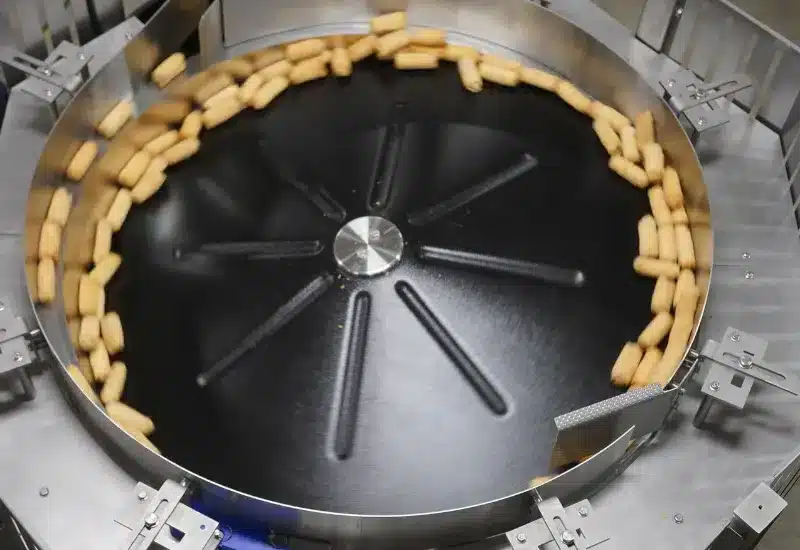
Sanitary Centrifugal Feeders

Hoosier Feeder designs and builds high-quality vibratory and centrifugal feeder systems that deliver consistent part orientation and reliable performance for automated production lines across a wide range of industries.
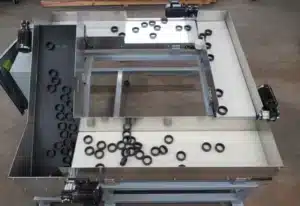
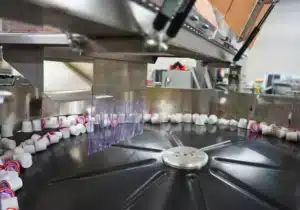
The Hoosier Sanitary Centrifugal Feeder is a high-speed, hygienic part-feeding solution designed for food, pharmaceutical, and clean manufacturing environments. Built with continuous-weld stainless-steel construction and IP69K-rated controls, these feeders deliver reliable, washdown-ready performance while maintaining product integrity and compliance with sanitary standards. Ideal applications include oriented feeding of snack cups, cheese sticks, breadsticks, and other packaged goods.
Key Features & Specifications:
• Fully welded stainless-steel construction for hygienic operation
• IP69K-rated controls for washdown environments
• High-speed feeding capability up to 700 parts per minute
• Toolless changeovers for faster cleaning and reduced downtime
• Compatible with robotic systems, flow wrappers, and tray packers
• Designed for consistent, gentle handling of delicate products
• Engineered for durability and long service life in demanding applications
When launching a new automation project, In-Position Technologies engineers take a consultative approach. First, they assess the application’s requirements to determine the best feeding solution for the job. Then, they perform all necessary evaluations to ensure the system delivers reliable performance within customer-defined specifications—without introducing unnecessary cost.
Their evaluations include:
• Required Throughput
• Machine Cycle Time Expectations
• Part Geometry and Orientation Requirements
• Integration with Robots or Conveyors
• Clean-in-Place and Safety Considerations
When customers implement a Hoosier Sanitary Centrifugal Feeder as part of a complete automation package, IP Tech’s engineers ensure the solution is fully optimized by:
• Including all essential components and accessories for a turnkey deployment
• Verifying that each element works seamlessly together as a cohesive system
• Confirming that the configuration meets project specifications and goals