Why Consistent Adhesive Dispensing Is Harder Than You Think
Robotic adhesive dispensing plays a critical role in modern manufacturing, but achieving a consistent bead involves much more than robot accuracy alone. Every stage of the dispensing process influences quality, consistency, and long-term performance.
It’s More Than the Robot.
Material properties, environmental conditions, dispensing equipment, and process control all influence the final result. Understanding these variables helps manufacturers improve product quality, reduce waste, and maintain reliable production across a wide range of applications.

More Than Just Robot Accuracy
Successful robotic dispensing depends on the entire process—not just the robot. Adhesive viscosity, temperature, dispensing pressure, nozzle selection, and application speed can all affect bead consistency and repeatability. Even small process variations may result in inconsistent coverage, excess material, or poor adhesion.
Modern robotic dispensing systems combine precise robot motion with advanced dispensing equipment and process monitoring. Together, these technologies help manufacturers maintain consistent application quality while reducing scrap and minimizing rework.
Key Considerations:
🟥 Material viscosity and flow characteristics
🟥 Temperature and environmental conditions
🟥 Dispensing pressure and nozzle selection
🟥 Robot path accuracy and speed
🟥 Process monitoring and quality verification
Improve Dispensing Performance with the Right Solution
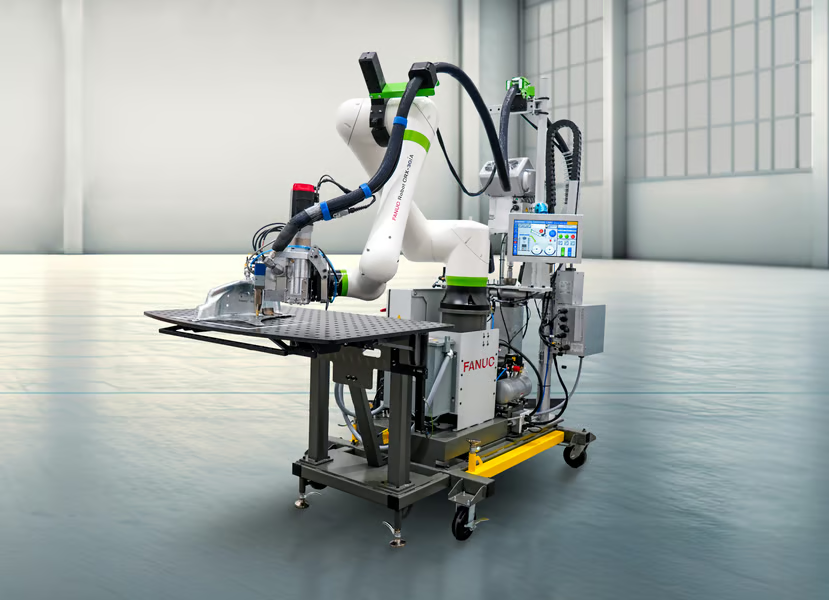
Whether you’re dispensing adhesives, sealants, lubricants, or gasketing materials, selecting the right automation solution is essential for long-term process reliability. As a FANUC Authorized System Integrator, In-Position Technologies works with manufacturers to evaluate dispensing applications, recommend the appropriate robotic solution, and integrate complete systems that improve consistency and production efficiency.
Book an Engineering Review