The Future of AI-Powered Robotics
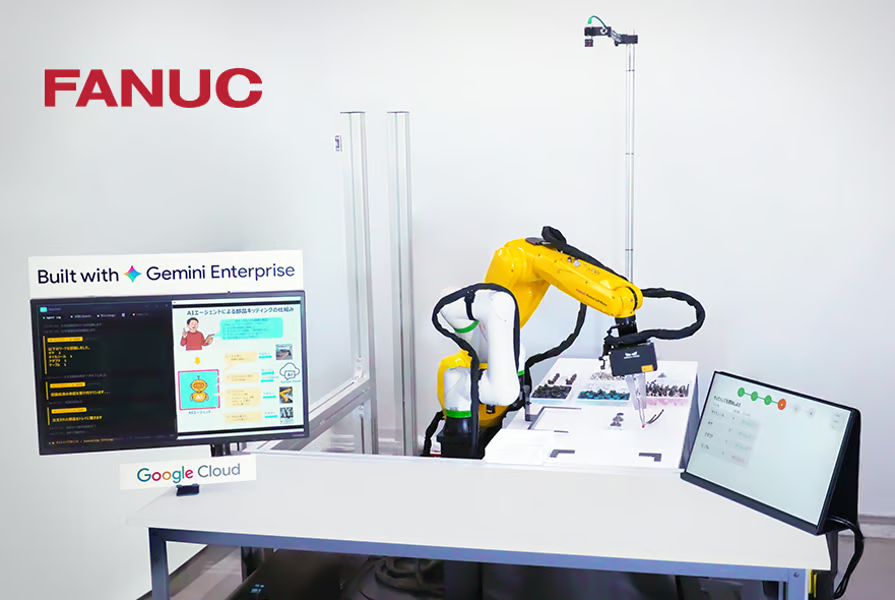
FANUC and Google recently announced a collaboration to advance Physical AI for industrial robots.
The initiative combines FANUC’s automation expertise with Google’s AI technologies to support more intelligent and adaptable robotic systems.
While traditional robots excel at repetitive tasks, many applications still require extensive programming and setup. Physical AI aims to improve flexibility by helping robots better understand and respond to their environment.
As manufacturers continue to pursue smarter automation, AI-powered robotics may play an increasingly important role across the factory floor.
How Physical AI Could Impact Manufacturing
Physical AI enables robots to perceive, reason, and act in real-world environments.
As a result, manufacturers could improve automation across applications such as material handling, machine tending, assembly, palletizing, and logistics.
The collaboration between FANUC and Google reflects a growing industry focus on combining artificial intelligence with industrial automation.
As the technology evolves, manufacturers may gain new opportunities to improve flexibility, efficiency, and productivity.