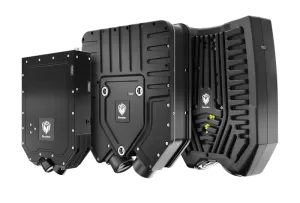

Gocator 2D Smart Cameras

LMI Technologies specializes in 3D scanning and inspection solutions, enhancing quality control, automation, and precision for manufacturing and industrial applications worldwide.
The Gocator 2D Smart Camera Series builds on LMI’s Gocator platform, delivering high-performance 2D machine vision with AI-powered edge inspection in a compact, all-in-one form factor. As a result, these sensors combine high-resolution imaging, onboard processing, and on-device deep learning to enable fast, reliable 2D inspection and measurement without external PCs or cloud dependency.
Features:
• High-resolution 2D imaging delivers accurate detection, measurement, and verification
• On-device AI processing using an NVIDIA Jetson GPU enables real-time inspection at the edge
• AI and traditional inspection tools support edge, blob, OCR, geometric, and anomaly detection
• On-device AI training and inference eliminate the need for cloud connectivity
• Fast inspection speeds support in-line inspection in high-throughput production environments
• Compact, industrial-grade design simplifies mechanical integration and reduces overall system footprint
• Browser-based user interface allows fast setup, tuning, and system monitoring
• Industrial protocol support enables seamless PLC and factory automation integration
When starting a new 2D vision project, In-Position Technologies engineers first review application requirements to confirm a Gocator 2D Smart Camera is the right fit. Next, we evaluate performance to ensure the camera meets accuracy, speed, and reliability requirements.
This includes:
• Determining required measurements and inspection criteria
• Confirming field of view, resolution, and working distance
• Verifying inspection speed and throughput requirements
• Evaluating mounting, lighting, and environmental considerations
• Specifying cables, brackets, and accessories
When ordering Gocator 2D Smart Cameras as part of a complete system, IP Tech engineers also perform a full solution review to ensure success. Specifically, we verify that:
• All required components are included for a fully functional system
• Hardware, software, and accessories are compatible and validated
• The final configuration meets performance and reliability expectations